Once you have settled on custom folding chairs, the next real decision is what they are made of. The frame material drives almost everything a buyer cares about later: how much weight a chair safely holds, how heavy it is to carry and stack, whether it can live outdoors, how it ages over hundreds of setups, and what it costs to field a fleet. Steel, resin, plastic, wood, and padded chairs are not interchangeable, and a choice that is perfect for a banquet hall can be the wrong call for a beach wedding or a school gym.
Here is a straight comparison of the main materials, with the load ratings and trade-offs that matter when you are speccing a real order.
Steel: the heavy-duty workhorse
Steel is the strongest common option and the heaviest. Steel folding chairs are typically rated somewhere between 300 and 800 pounds depending on the gauge of the tubing and the design, which is why they dominate general-purpose banquet and event fleets that have to survive constant, rough handling. The cost of that strength is weight: a steel chair is meaningfully heavier to carry, and a stack of them is heavier to move, which shows up as labor every time a room is turned over. Bare steel will also rust if it lives outdoors or in a damp store, so for any outdoor use you want a powder-coated or otherwise sealed finish rather than raw metal. For indoor banquet fleets that get used hard, steel is usually the default for good reason.
Resin and plastic: light and weatherproof, but not one thing
The most common mistake here is treating “plastic” and “resin” as the same material. Reinforced resin event chairs are engineered products with an internal metal frame, and the commercial versions are frequently rated for very high loads, commonly 500 to 1,000 pounds, while staying light enough to carry easily. UV-stabilized resin also resists cracking, warping, and fading in weather, which makes it the go-to for outdoor ceremonies and poolside events. It wipes clean and is close to maintenance-free.
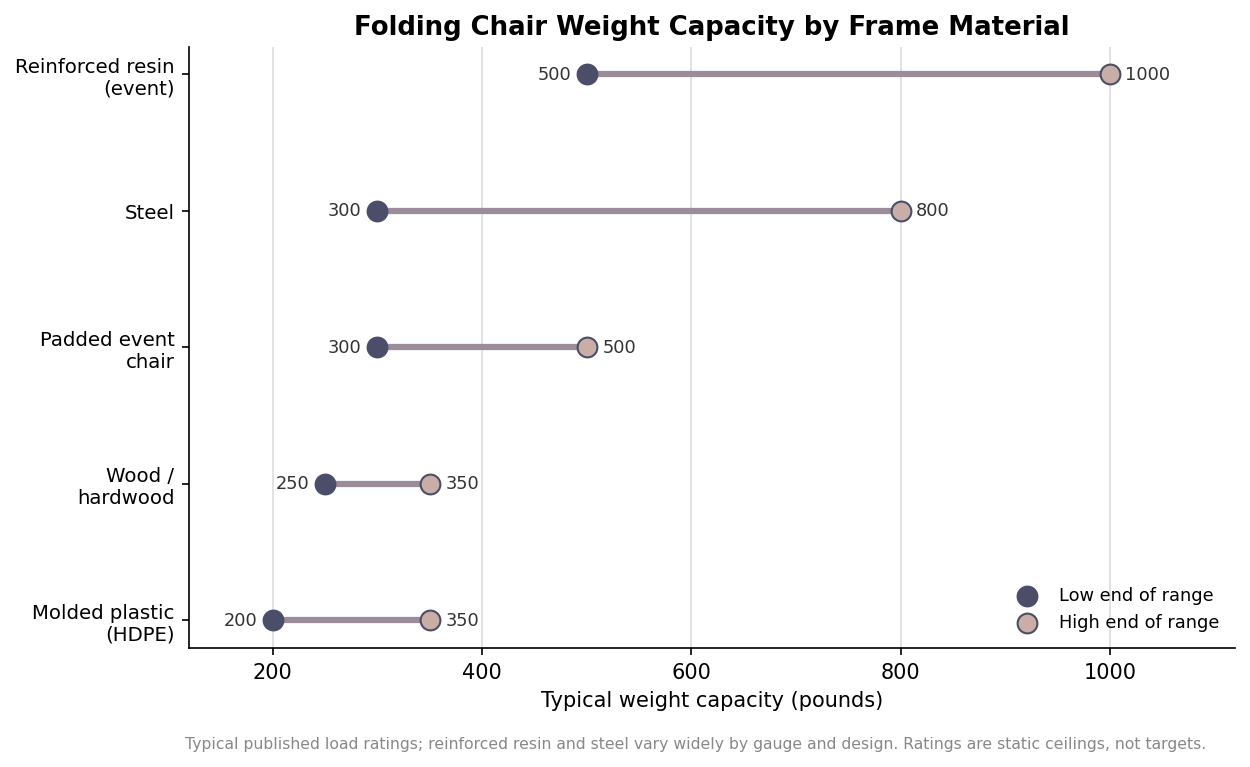
Simple molded plastic chairs are a different, cheaper tier. A basic high-density polyethylene (HDPE) folding chair typically carries 200 to 350 pounds and is the lightest and least expensive option, well suited to schools, community halls, and casual use where budget and easy handling matter more than a premium look. It is weather-tolerant and easy to clean, but it will not match a reinforced resin chair for load or for a formal appearance. The rule of thumb is that reinforced resin buys you strength and looks, while plain plastic buys you the lowest cost and weight.
Wood and hardwood: the formal choice
Wood folding chairs, including hardwood banquet styles, are chosen mostly for appearance, for weddings, worship halls, and upscale events where a warmer, more traditional look is worth the trade-offs. Those trade-offs are real: wood is prone to chipping, scratching, and cracking with frequent handling, and it is sensitive to moisture, so humidity and outdoor exposure can cause warping. It also needs more upkeep over time, with joints that loosen and finishes that need refreshing. Wood is a strong pick for indoor, lower-churn, appearance-first settings, and a weak one for a high-turnover outdoor fleet.
Padded chairs: comfort as a spec
Padded folding chairs are usually a steel or resin frame with an upholstered seat, and they exist to solve one problem: keeping people comfortable when they will be seated for a long time, at a conference, a ceremony, or a long service. Load ratings track the underlying frame, commonly in the 300 to 500 pound range for padded event models. The upholstery adds cost and adds a maintenance consideration, since fabric shows wear and soiling faster than a wipe-clean shell, but for seated-audience venues the comfort is often worth it. Think of padding as a comfort layer bolted onto whichever frame material you have already chosen, not as a separate structural class.
Matching the material to the job
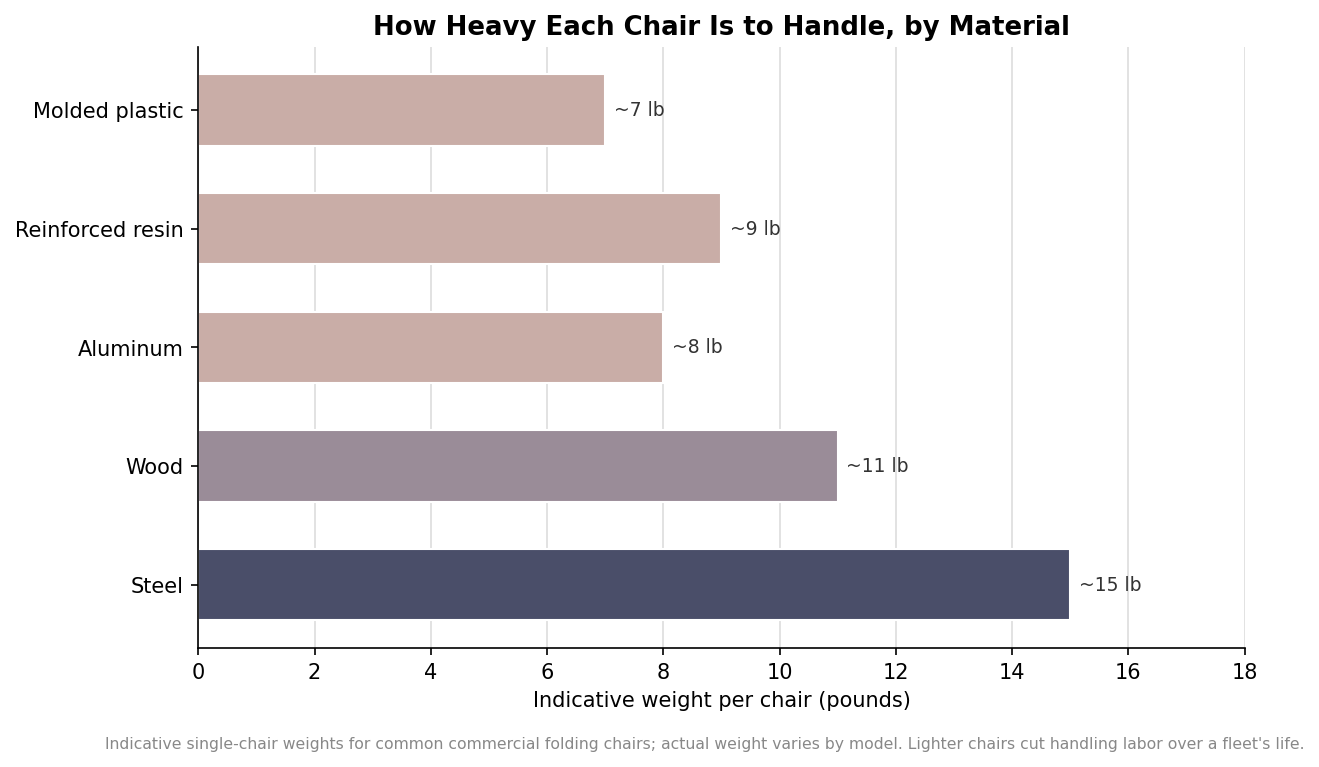
The clean way to decide is to start from the environment and the churn. For hard-used indoor banquet and event fleets, steel gives the widest safety margin and takes abuse, if you can absorb the weight in handling. For anything outdoors or in variable weather, UV-stabilized reinforced resin is the safest choice, combining high load ratings with true weather resistance and light handling. For tight budgets and casual, high-volume seating, molded plastic is hard to beat on cost and portability. For formal, appearance-led indoor events, wood earns its keep on looks. And padding is the answer whenever people will sit for a long time, layered onto whichever frame fits the venue.
Two practical notes cut across all of them. Whatever the material, the printed weight rating is a static figure and real-world safety depends on the chair being on level ground and not leaned back on two legs, so treat the number as a ceiling rather than a target. And factor storage and transport into the material choice from the start, because a lighter resin or plastic chair that stacks high saves real labor over a fleet’s life, while a heavier steel or wood fleet may justify matched trolleys to move it safely. Choose the material for where the chairs will actually live and how often they will be set up, and the rest of the buying decision gets much simpler.